

How We Farm
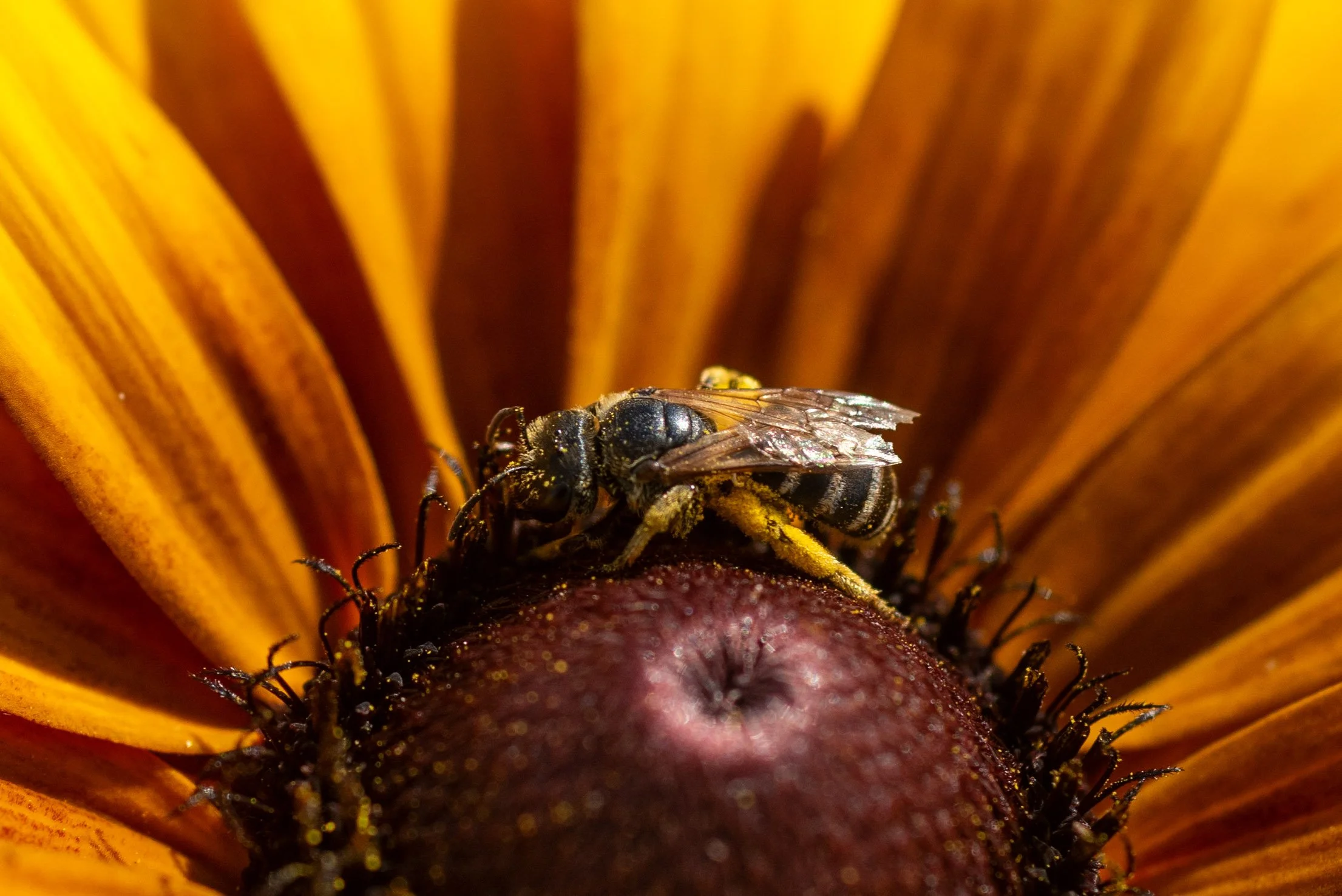
Our work is grounded in paying attention to the agro-ecosystem of our farm as a whole, from the microorganisms in our soil that protect and nurture our crops, to our horses that fertilize our fields, and the native pollinators that bring our fruits to bear. The past few seasons we have been transitioning the majority of our production ground to permanent beds to help improve the health of the soil and to be more climate resilient as our weather patterns change in the face of climate change. Our larger field crops and hay are managed by our Belgian and Percheron draft horses.
The Farmers
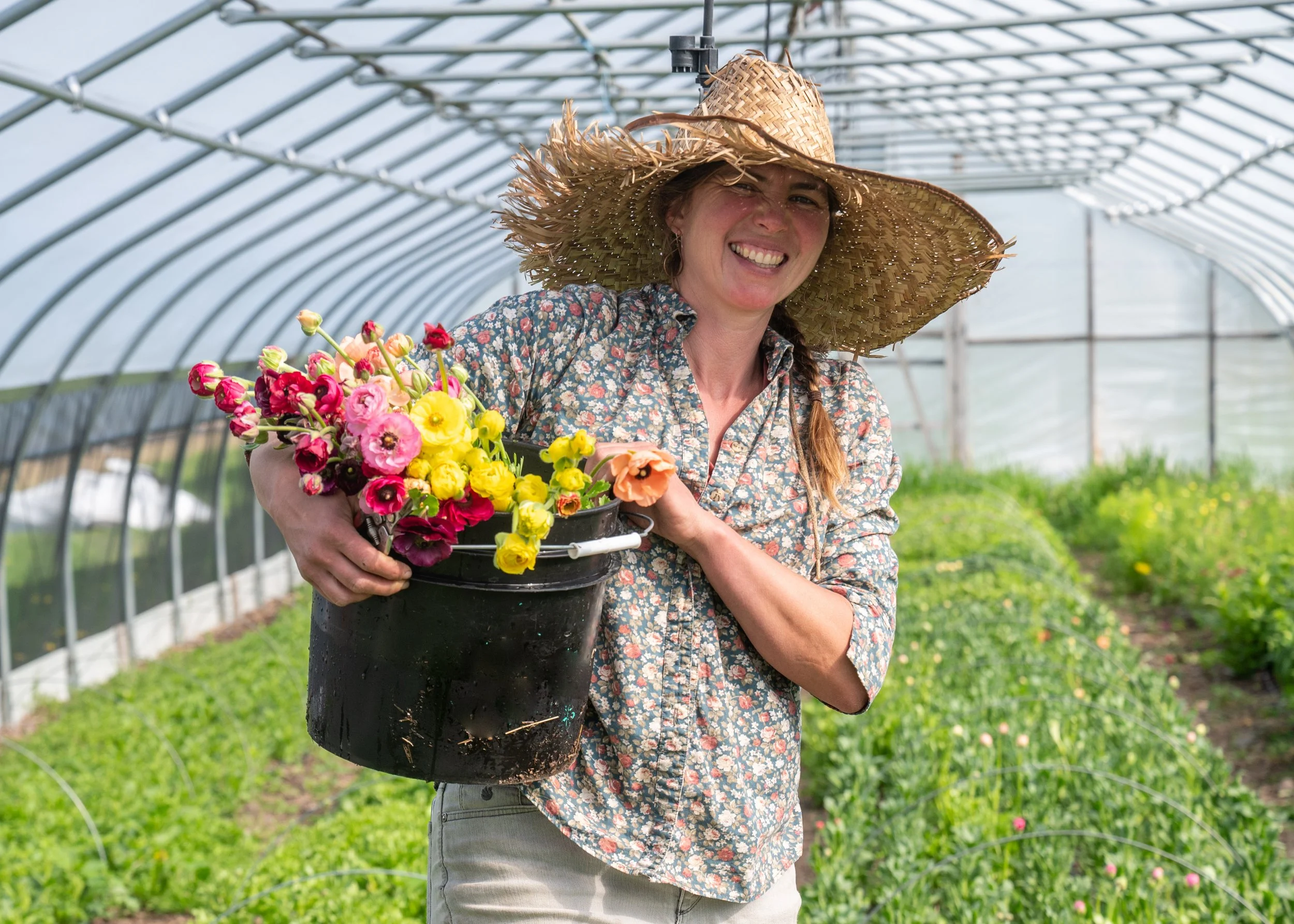
Adrienne Lee can’t quite believe she has over 20 seasons of organic farming under her belt here in Maine and knows she learns something new every day. While there has been a lot of evolution in her farming reality in that time, the constant has been her drive to do meaningful, nourishing work for her community, work with the land, and cultivate a life in tune with the environment around her. At New Beat she is the Vegetable and Flower Production Manager and also wears another hat helping to oversee Daybreak Growers Alliance that she co-founded. When she is not farming you can find her on an adventure with her daughter Robin, dancing, listening to birds, and exploring the wild beauty of Maine.
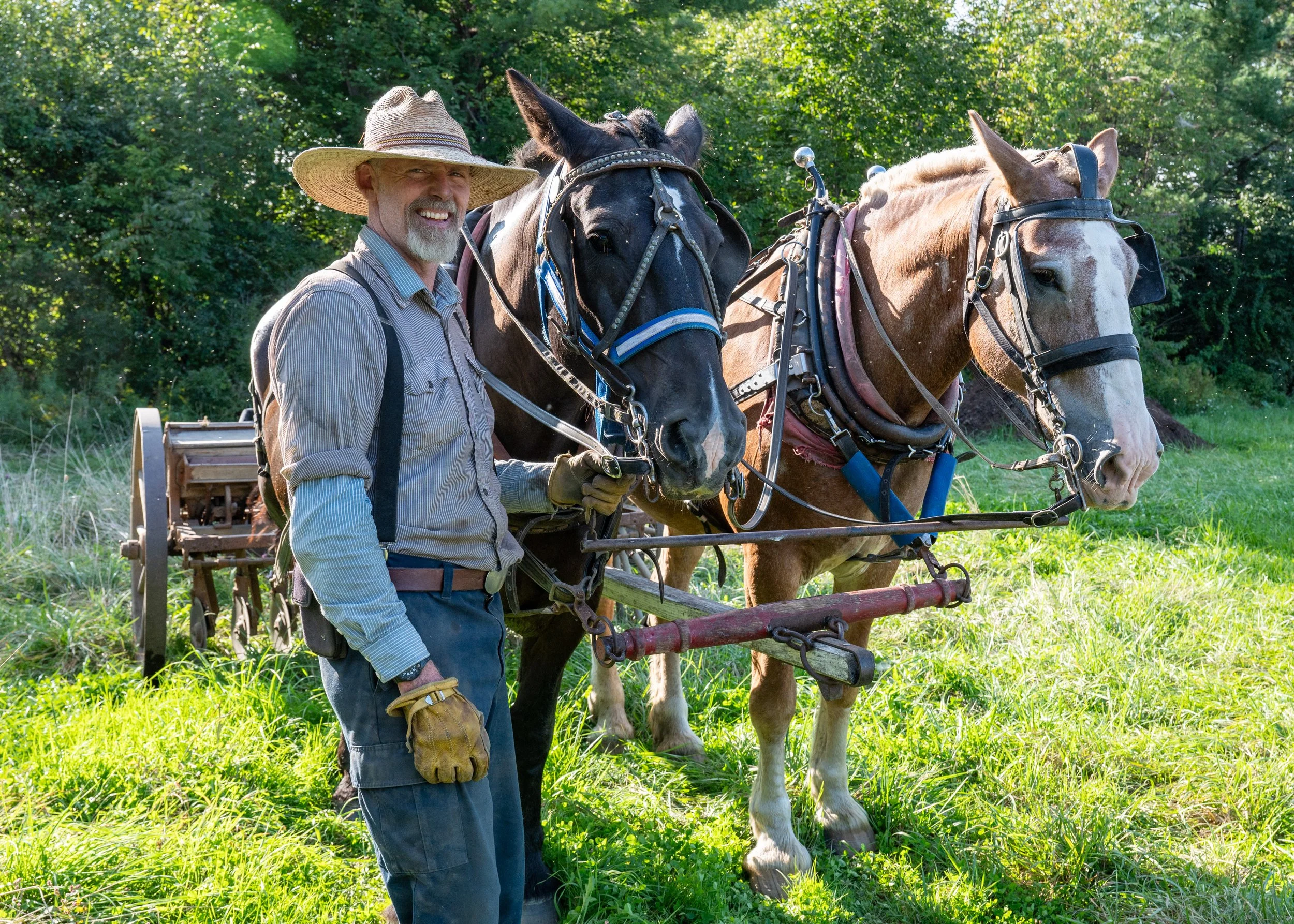
Ken Lamson grew up milking cows, stacking hay and running wild on several Maine dairy farms. After college and ten years “away”, he returned to Maine and connected back with his agricultural roots. After an apprenticeship at a horse-powered veggie farm he knew horses had to be a part of his future. It could be argued that he is happiest with a set of lines in his hands and a team of horses. Ken is the Field, Livestock and Infrastructure manager as well as runs our booth at the Belfast Farmers Market. Ken loves cooking good food, making hay and logging with his horses, and going on adventures with his family!
Our Team
We couldn’t do what we do without an incredible team of individuals who put their heart and hard work into the farm each season. As a small diversified farm our team is adaptable, fluidly move from one task to the next, able to specialize and focus in with amazing attention to detail, as well as able to power through the harder physical labor it takes to manage our permanent bed systems. Their passion, laughter and care enlivens the day and can be seen and tasted in the food they produce and the bouquets that they make!
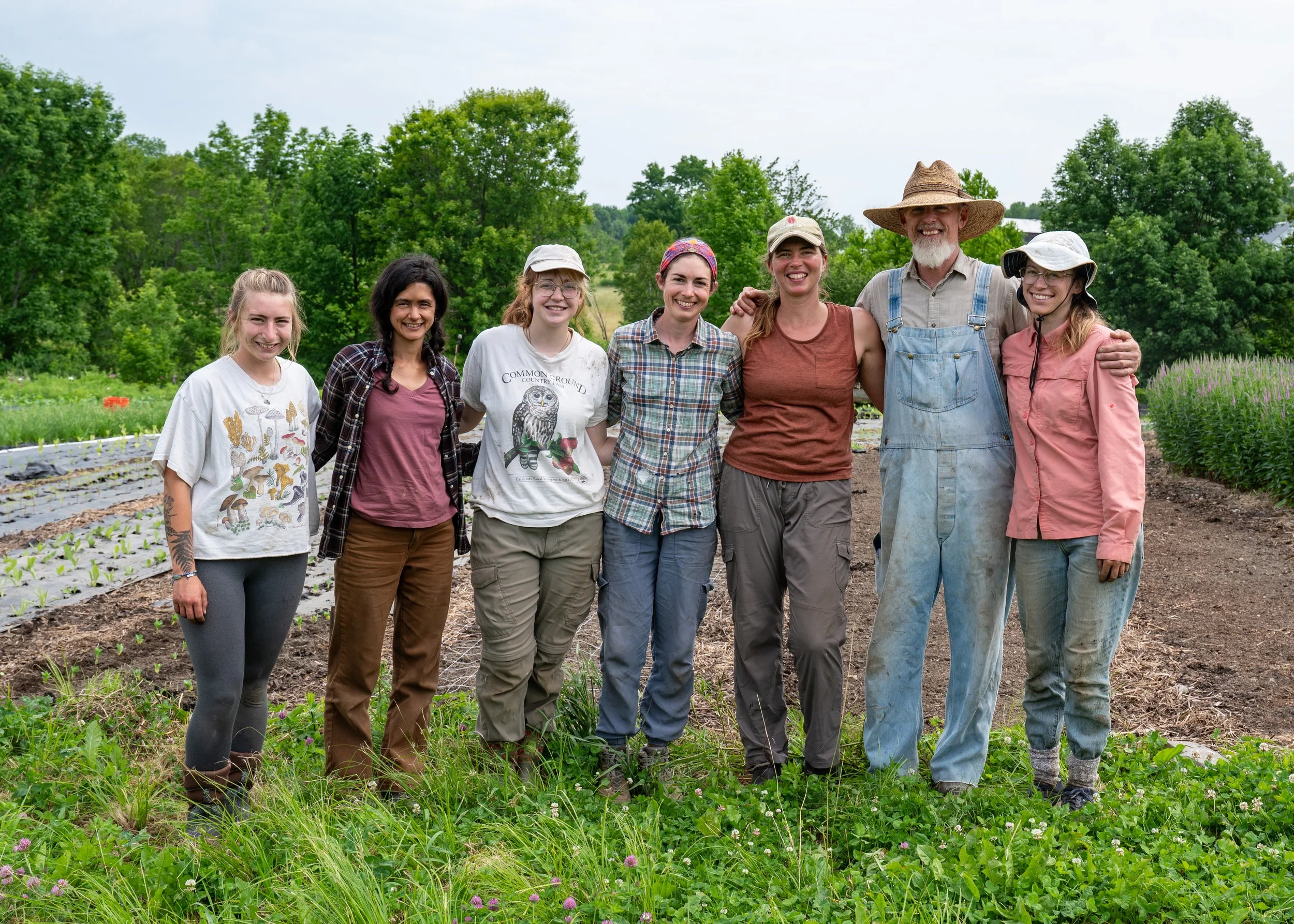
Our 2025 Team: Riley, Jahan, Annie, Nicky, Adrienne, Ken, and Emily
The Land
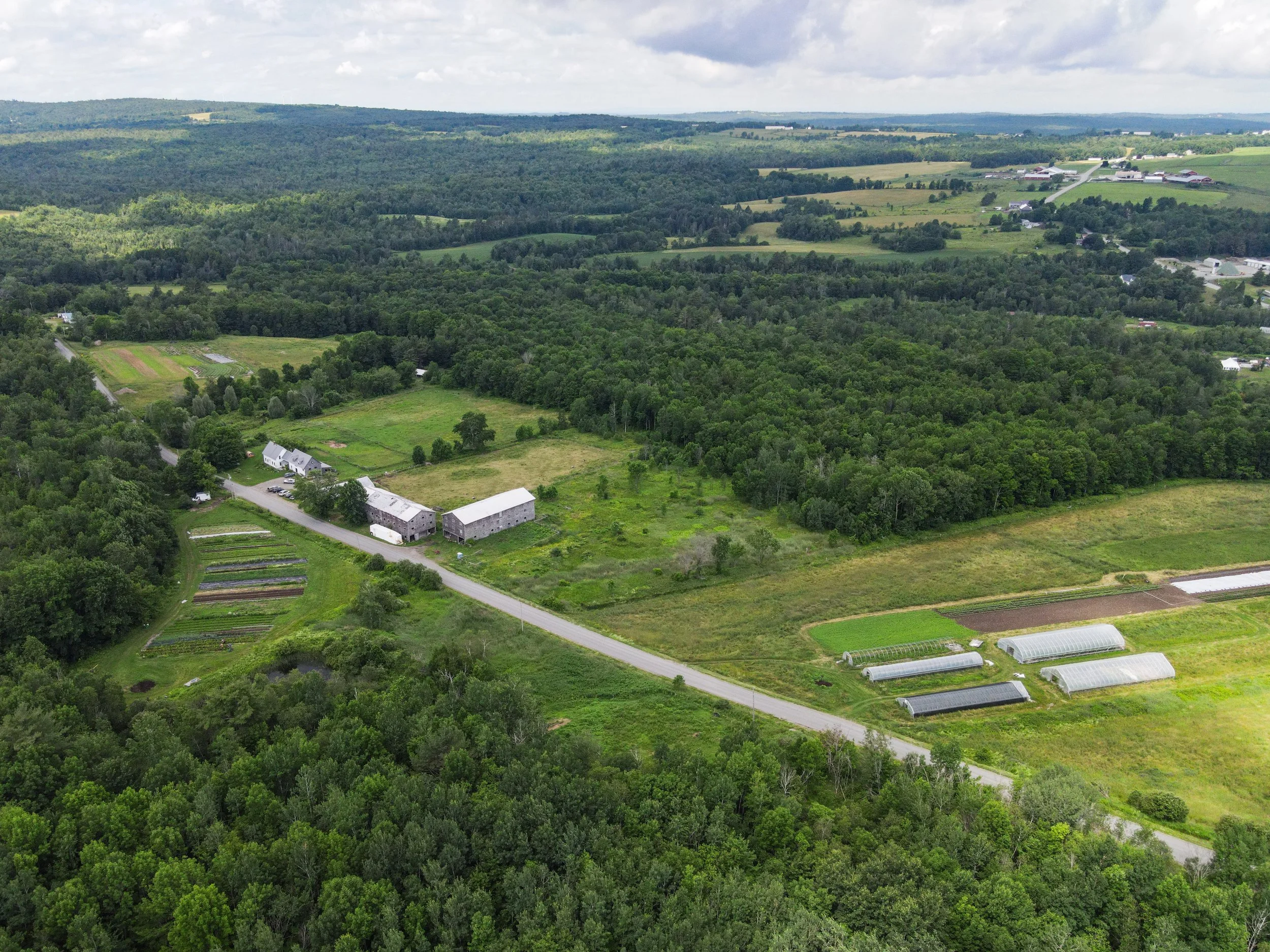
Our farm is located in the rolling hills of the rich agricultural community of inland Waldo County. We are nestled between Belfast and Waterville and get to enjoy both the easy access to the coast and mountains. All told, the farm is 94 acres of fields and forest. We have roughly 6 tillable acres which include 2 acres in permanent low/no-till beds. The remainder rotates between 2 acres cultivated with our draft horses, and soil-building cover crops. The size of our farm affords us the ability to have enough land to make our own hay for our horses and the harvest the firewood to heat our home and seedling house. We have 5 high tunnels that help us extend the seasons, growing overwintered flowers and heat-loving tomatoes in the summer.
Adaptation
In the winter of 2022, we were devastated to learn that some of our fields and our home’s drinking water had PFAS contamination as a result of sludge fertilizer spread here before our time. PFAS are a class of “forever chemicals” that are used in a wide variety of products from firefighting foam, to takeout containers, to waterproof raingear. They are harmful to human health even at low levels and our family continues to be tested and monitored for the effects.
PFAS entered our farm’s ecosystem through sludge made from industrial wastewater and municipal waste marketed to farmers all over the country as a fertilizer starting in the 1970s. Although this sludge is banned in organic farming, and we have always been organic farmers, PFAS lingers in some areas of our fields from applications made to our land decades ago.
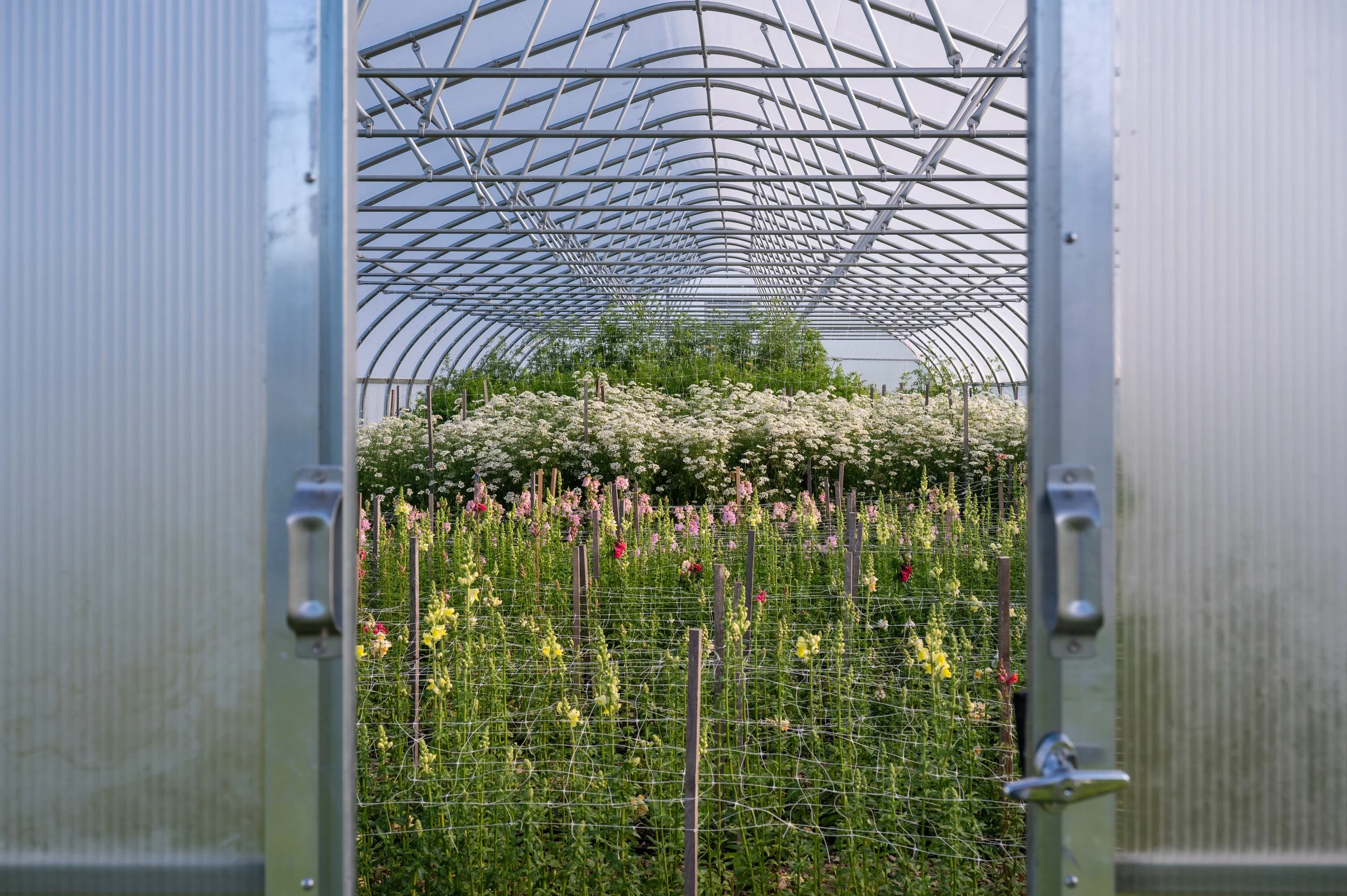
Since discovery of PFAS on our land, we have been conducting in-depth soil, water and plant tissue sampling across our farm. We have learned which crops take up PFAS, and have adapted our crop plans accordingly. High tunnels that we thought we’d be using for winter greens production are now the home of our overwintered flowers for early spring blooms. Crops that take up detectable levels of PFAS are only grown in fields that were never spread with sludge. Our farm’s entire water system has been overhauled, with filtration systems and a new clean well drilled. We have had to adapt our vegetable production due to limitations of some of our fields, but we hope to find new ways to work with what we have as research progresses.
We are both committed to ensuring that we can offer our community healthy nutritious food as well as nurture and do our part to heal this little part of the earth we call home. We continue to diligently monitor our water and crops to ensure we are only selling products that meet all safety guidelines. And our family and crew continue to be nourished by the safe, organic food we grow here.
If you have questions about PFAS and our farm please don’t hesitate to contact us!